NZ craft distilleries are running a full category now, from boutique gin and single-cask whisky through to vodka, rum, liqueurs and the RTD lines sitting alongside them in the liquor store chiller. Spirit labels NZ distilleries trust have to work across that whole range. The Label Room has been doing spirit label printing for over 18 years from our Auckland factory, on runs from 100 for a limited bottling through to RTD core ranges of 50,000 and above, colour matched across every press.
Why NZ distilleries choose us
We work with distilleries across the spirit regions: gin makers in Wellington and Hawke’s Bay, whisky distilleries in Wakatipu, Cardrona and Reefton, and the broader craft scene around Marlborough and Auckland. The work is regional, and so is the service. We travel through and sit down at the still room or the office to walk through stock and finish options with the people making the call.
Most distilleries we work with run two programmes in parallel. There’s the premium bottle work, a limited gin release of 800, a single-cask whisky at 150 or a vintage botanical edition of 1,200. And there’s the RTD line in 250ml cans or 330ml stubbies, running 30,000 to 80,000 a year per SKU through liquor stores (RTDs and spirits are off-licence only in NZ, not on the supermarket shelf). Both come off our presses colour matched, so a distillery does not have to choose between premium printing for the limited work and a cheaper printer for the RTD volume.
Multi-layer finishes for premium spirits
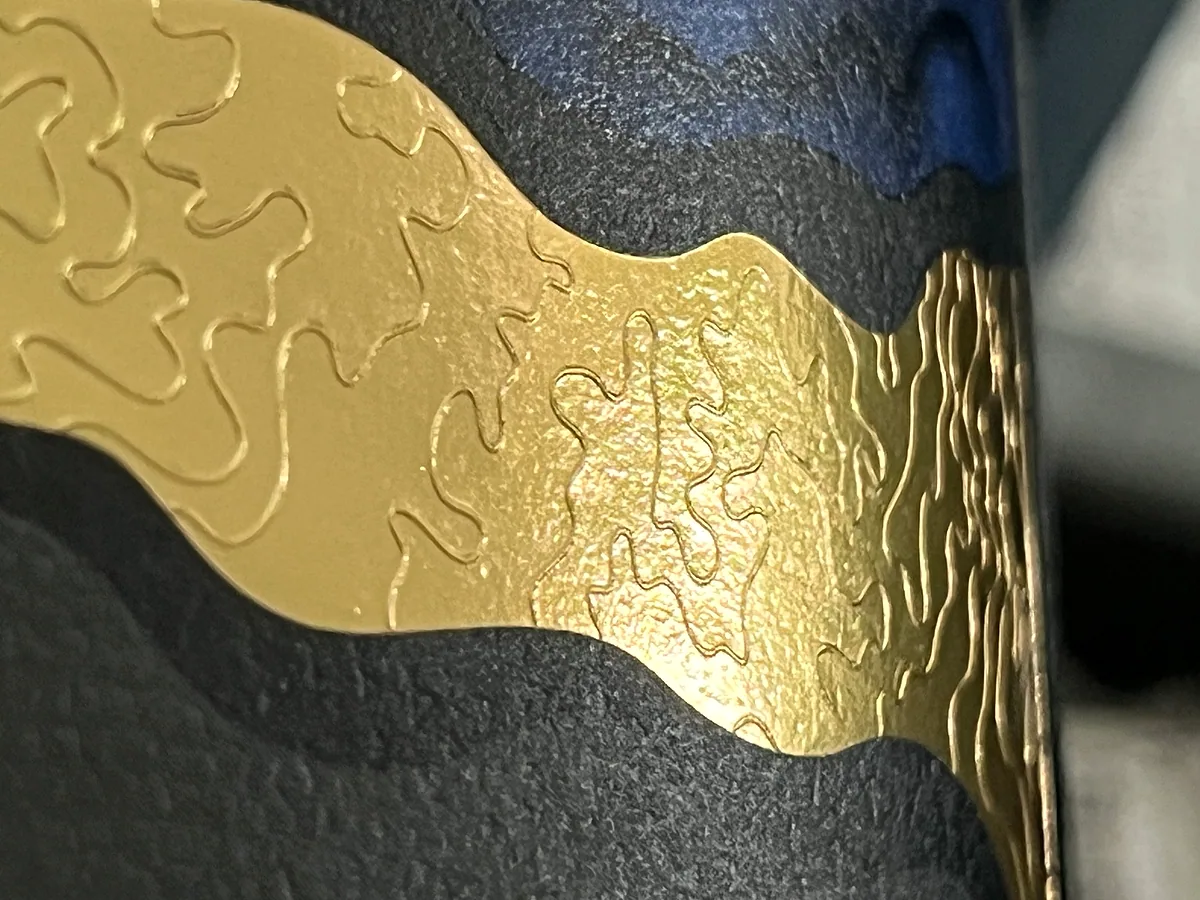
Hot foil stamping comes in gold, silver, copper and custom colours, and on premium spirit work it usually layers. A foil brand mark over a foil banding block, registered tightly so the two foils sit where the artwork put them, reads as proper metal in a way printed metallic ink cannot.
Embossing comes in two registers. Deep emboss is the high-relief treatment for a distillery crest or a hero typographic mark, casting a real shadow under retail lighting. Registered emboss is subtler, lining up under a foil block or a printed botanical panel to add a tactile lift. A heavier cotton paper takes a deeper emboss than a thinner uncoated.
Spot UV and raised UV pick out hero elements against an otherwise matte ground. Raised UV gives a textural pop you can feel through the bottle, useful for botanical illustrations on gin and hero typography on whisky. Matte and gloss lamination protect the print and tune the final feel. To see how the layers stack up, compare finishes side by side. Reveal labels use clear film with selective opaque print, leaving areas of glass uncovered so the spirit itself becomes part of the design.
For limited bottlings, variable data printing puts a unique sequential number on every label. A 200-bottle single-cask whisky release leaves our digital press with each label individually numbered, often paired with the cask reference, batch code or release date. The numbering runs in the same pass as the rest of the artwork, so a numbered limited edition does not cost a separate setup.
Stocks for spirit labels
Substrate choice does as much work as finish on a spirit label. When you have picked a stock, check the spirit bottle label sizes before you finalise the artwork.
- Cotton and linen papers. Premium textured stocks that hold deep emboss and multi-layer foil cleanly. Default for limited gin releases, single-cask whisky and reserve work.
- Premium uncoated stocks. A lighter premium register at lower cost. Suits core gin and vodka ranges that want character without the cotton paper price.
- Metallic gold and silver papers. Luxury accent. Useful as a base layer under spot colour and varnish, where the shine reads through the print. Common on whisky and aged rum positioning.
- Black Pepper from Fedrigoni. A thick uncoated black stock we overprint with white and colour inks. The label reads as dark-on-dark on the bottle until the print catches the light. Distinctive on limited gin, reserve whisky and dark-spirit work where the brand wants the bottle to feel stealth before it feels luxury.
- Clear films. For reveal labels and the no-label look on premium glass.
- Treated uncoateds. RTD work mostly. The right call when an RTD wants a paper aesthetic on a can or stubby that has to survive a chiller’s wet-dry cycle without lifting or wrinkling.
We don’t run thermal transfer stocks. The press heat on our offset runs is too high for them. If you need an overprintable thermal label for batch coding downstream, we’ll point you to an alternative.
Print method by run length: digital, offset, and how colour stays the same
The choice between digital and offset comes down to run length, artwork stability and per-unit cost. We run both in-house and the same spirit label can come off either press at the same colour.
Digital is the call for runs from 100 labels up to a few thousand: limited bottlings, single-cask whisky, vintage gin releases and distillery-only exclusives. No plates, no setup charge, and artwork can change between SKUs without rework.
Offset starts making commercial sense at roughly 10,000 labels per SKU. RTD core ranges sit firmly here, alongside scaled spirit programmes that have moved past the boutique phase into liquor store distribution. Once plates are cut, repeats are quick and the per-label cost drops. If your run is near the threshold, send the spec and we’ll price both methods side by side.
UV-cured offset runs on our hybrid press in our Auckland factory, with the digital press alongside as a separate machine. Shared colour targets are part of why colour holds across offset and digital, with the digital press colour-matched to the same Pantone references.
Take a Wakatipu whisky distillery with a flagship single malt at 18,000 a year, two single-cask releases at 200 each, and an RTD whisky highball at 60,000 through liquor stores. The flagship and RTD run offset for the per-unit cost. The single-casks run digital, printed to match the offset core range so the full portfolio reads as one family from cellar door shelf to liquor store chiller.
Design and prepress support
Most distilleries come to us with a designer already on the brief. We work directly with them through the proofing cycle: preflighting the artwork, flagging anything that won’t print as drawn, and sending Pantone-matched proofs on the actual stock before plates or digital files are committed. Multi-layer foil registration is the place spirit labels most often go wrong in print, so we set foil order and emboss tooling at prepress and proof both on the chosen stock. A foil colour behaves differently on cotton paper than on a metallised paper or a treated uncoated, and the proof is checked under retail lighting. Before you send files, you can check alcohol labelling basics and preview your label on a bottle in 3D.
For distilleries without a designer, our prepress team can take an existing brand direction or reference label and turn it into a print-ready file for a new SKU.
From artwork to bottle
A typical spirit label job runs through four steps:
- Brief and quote. Send artwork or a mock-up with the run length, stock direction and finish list. If the run is near the digital-to-offset crossover, we’ll price both methods.
- Prepress and proof. Preflight, Pantone matching and a physical proof on the actual stock. Compliance review (NZ alcohol labelling basics: standard drinks, alcohol percentage, the pregnancy warning label, allergen statements) happens here. Sign-off before anything moves to plate or press.
- Plate-making and press. Plates for offset, file prep for digital. First-off checked against the approved proof before the run starts.
- Finishing and dispatch. Foil, emboss, spot UV, raised UV, lamination, die-cutting and inspection, then rewinding to your applicator’s spec.
Budget 7-10 working days from proof approval for a digital run. First-run offset is 10-15 working days. Repeat offset off existing plates is 7-10. Call ahead if you need it faster. The alcohol label compliance guide covers the NZ basics in more depth (wine and spirits).
Send a brief or give us a call. We’ll quote within a day, and if it makes sense we’ll bring a sample pack on the next regional visit.