Offset label printing is how most of our mid-to-high volume work comes off the press. For food and beverage brands with established SKUs and wine producers running 10,000+ bottles per core SKU, offset is usually the cheapest method per label. We’ve been running offset label printing out of Auckland for 18+ years and can price it against digital when a job sits near the crossover point.
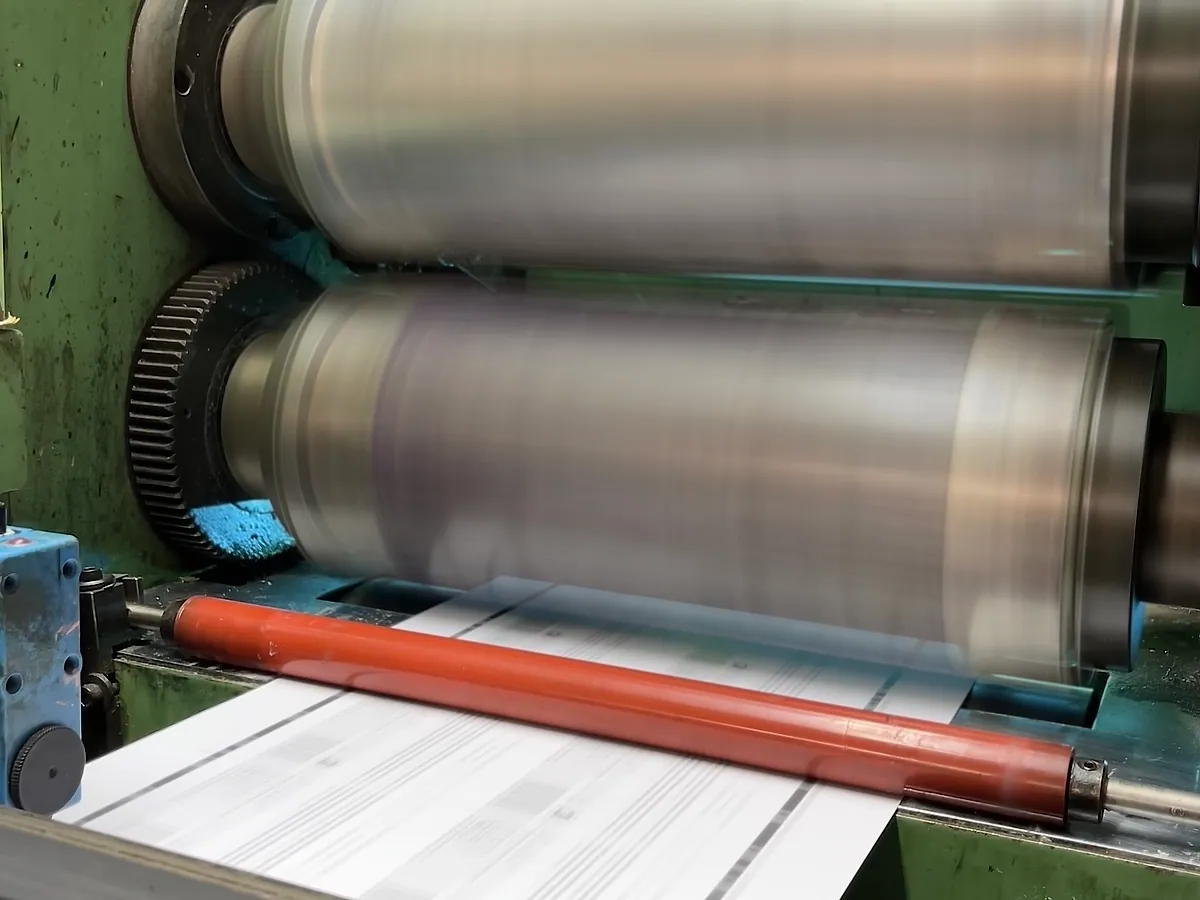
When offset label printing is the right choice
Offset pays back at volume. The press takes longer to set up than digital, with plate-making and ink-mixing before the first label comes off. Once it’s running, it prints fast and cheap, and holds tight colour across the run. The exact crossover where offset becomes the cheaper option depends on stock, colour count and label size, but a useful rule of thumb: offset starts making commercial sense around 10,000 labels per SKU, and the saving grows from there.
A few signals point towards offset:
- Established SKUs with locked artwork. Core range wine labels, supermarket food lines, standard personal care ranges.
- Repeat orders on a regular cycle. Once plates are cut, reprints are quick. First-run cost is amortised across every subsequent run.
- Tight per-unit budgets at volume. Above the crossover point, the unit rate is meaningfully lower than digital.
- Process colour and fine tonal detail. Offset handles halftones and smooth gradients cleanly, which matters for photographic artwork and detailed illustration.
If your run length sits under the crossover, or your artwork is still moving, digital label printing is almost always the better call. No plates, no setup charge, full colour from the first label.
Our offset capability
We run UV-cured offset in-house. Offset is the dominant method for our mid-to-high volume customers because it holds colour, runs efficiently once set up, and gives very clean detail on repeat production work.
Everything happens on site in Auckland. Prepress, plate-making, press, finishing and dispatch under one roof. No subcontracting. When something on a job needs a second look, we walk across the factory floor and sort it. Other shops phone a subcontractor.
Colour matching across digital and offset
The same label, printed across our digital press and our offset press, can be held to the same colour target. Most printers struggle with that handover.
Picture a winery with an established Marlborough sauvignon blanc at 40,000 labels a year for the core range and a 500-label limited-release single vineyard bottling. The core range runs offset. The limited release runs digital. A customer who buys a bottle of each from the same cellar door sees the same label colour on the shelf. Same Pantones, same stocks where possible, same finish. We proof on the actual stock before every run and hold colour across methods, so the brand doesn’t drift between a short digital run and a long offset run.
That matters when you’re scaling. A brand that starts on digital and grows into offset volume doesn’t have to redesign or re-spec the label to keep the colour it’s known for. Send the existing artwork, send a reference label, and we’ll match to what’s already out there. To see how an RGB colour will shift in CMYK, try the colour converter.
Materials and finishes we run
The offset substrate list covers most of what mid-to-high volume labels actually need:
- Metallised films. Metallic shine without the cost of hot foil. Common on beer, RTD and promotional work.
- Premium wine textured stocks. Cotton and linen papers for wine, spirits and high-end food. Holds emboss and foil well.
- Treated uncoateds. For wines and beers that need ice-bucket stability without losing the uncoated look.
- White and clear BOPP. The workhorse for food, beverage, personal care and household products. Durable, moisture-resistant, dimensionally stable. See our BOPP label options for the full spec.
- Coated and uncoated papers. Standard semi-gloss, matte and uncoated paper stocks for paper-look ranges.
We do not run thermal transfer stocks on offset. The press heat is too high for them, so if you need overprintable thermal transfer for batch or date coding downstream, talk to us about the right alternative.
Finishing options on offset runs include hot foil stamping (gold, silver, copper, custom), embossing and debossing, spot UV, Highbuild, gloss and matte lamination, varnish and die-cutting to custom shapes. Finishing happens on our own line in the same building as the press.
From artwork to press
A typical offset job runs through these steps:
- Artwork and quote. Send print-ready artwork (or near it) with the run length and stock spec. If you’re unsure whether offset or digital is the cheaper call, send the brief and we’ll price both.
- Prepress and proofing. Our prepress team preflights the file, generates a proof on the actual stock, and sends it for sign-off. Every element gets checked under real lighting before plates are made.
- Plate-making. Once the proof is approved, plates are produced for each colour. This is the step digital skips, and it’s the main reason offset takes longer on a first run.
- Press. Once plates are mounted and registration is set, the first-off gets checked against the approved proof. After that, the press just runs.
- Finishing and dispatch. Foil, emboss, lamination, die-cutting, inspection, then rewinding to your core size and roll direction before it ships.
Budget 10-15 working days from proof approval for a first-run offset job. Repeat orders off existing plates run in 7-10 working days. If you need a job faster than that, call ahead and we’ll see what we can do.
Offset or digital: when to use which
The quickest way to think about method choice is by example. Three scenarios.
Say a craft brewery is running 800 labels per SKU across eight rotating seasonals, with artwork changing every release. They stay on digital. Plate costs would sink the job, and digital handles the variant artwork without any rework between SKUs.
Or take a winery with a Marlborough sauvignon blanc at 30,000 labels a year, a pinot noir at 12,000, and two limited-release single vineyard bottlings at 400 each. The two core SKUs move to offset for the per-unit cost and the process colour. The limited releases stay on digital, printed to match the offset core range so the full portfolio reads as one family on the shelf.
Or a food brand reprinting a 60,000-label supermarket SKU every six weeks. That’s a clear offset job. Plates get cut once, the artwork is locked, the run is regular, and the per-label cost on offset over a full year is significantly lower than digital.
Most of our customers run more than one method. Offset handles the core range and reprints. Digital covers seasonals and samples. You don’t have to pick one supplier for offset and another for digital. The same labels, matched across methods, come out of the same Auckland factory.
Offset does its best work on high-volume label printing for established food and beverage programmes and core-range wine ranges. A winery running 10,000+ bottles per SKU on a core range (see wine labels), or a food brand with settled supermarket lines (see food and beverage labels), is in offset territory. You can see what a digital run costs in the estimator, then ask us to price offset beside it.
Common questions
See the FAQ section below the main content.
Send a brief with the run length, artwork (or a mock-up) and the stock you have in mind. If it’s not obvious which method fits the job, we’ll price the options and send the numbers back.